
Solar Panel Installation in Tampa Bay & Orlando
New residential and commercial solar across Clearwater, Tampa Bay and Orlando, installed by a Florida Certified Solar Contractor (CVC57333) that already maintains and repairs systems statewide.
Call (727) 594-0010 Today!
Tampa Bay

Orlando
daytona beach
sarasota
fort myers
miami


New Solar Installs for Florida Homes and Businesses
Sun Lift Solar installs new solar for homeowners and businesses across Clearwater, St. Petersburg, Tampa, Sarasota, Orlando and Daytona Beach as a Florida Certified Solar Contractor (CVC57333). Here’s everything a new install with us includes.
One Florida Certified Solar Contractor, one crew and one point of contact from the site visit to permission to operate.
Enphase, SolarEdge and Tesla: Matched to Your Roof
We’re certified installers for Enphase, SolarEdge and Tesla. The right platform depends on your roof, your shade and whether you want backup power.
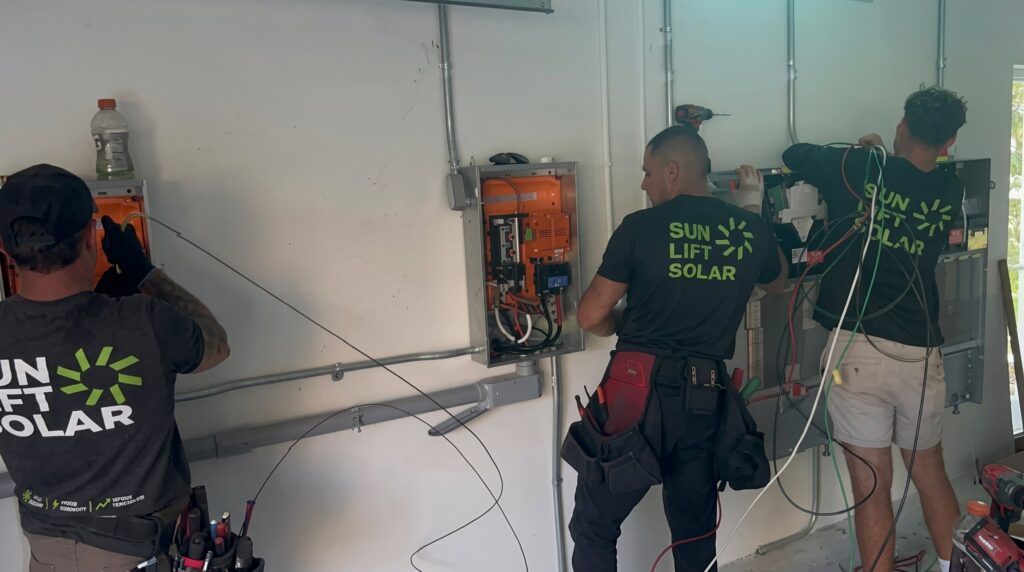

Enphase IQ Microinverters
A microinverter under each panel converts power on the roof. Best for multiple roof planes and partial shade, with no single central inverter to fail.

Enphase IQ Battery
Pairs with IQ microinverters to keep your home running through outages, monitored in the same Enphase app.

SolarEdge
An optimizer at each panel feeds one central inverter, giving panel-level monitoring at a lower per-panel cost on larger arrays.
Tesla Powerwall
Whole-home backup with a built-in inverter and backup gateway, installed by a Tesla Certified Installer. Powerwall 3 details

Panel-Level Monitoring
You see every panel’s output in the app, and so do we, so a service call is a fix, not a search.
Built for Florida Shade, Heat and Storms
Equipment and installation choices matter more on a Florida roof than almost anywhere. Here is how they play out on yours.
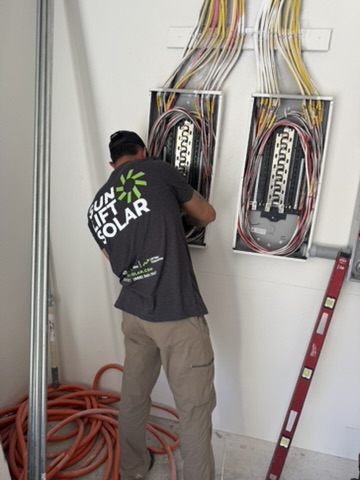
Why Our Installs Hold Up
Most of our work is removing, reinstalling, maintaining and repairing systems other companies installed. We bring that to every new install: build it to last on a Florida roof, and build it so it can be serviced later.
Install standards on every job:
- Every roof attachment flashed into the roof, not sealed with caulk alone
- Wiring clipped up off the roof surface, never resting on shingles or tile
- Matched connectors from the same manufacturer at every junction
- Critter guard around the array edge
- A layout that leaves room for roof repairs and a clean future removal
- Photos of every attachment before panels cover it, saved to your job file
- Monitoring commissioned and tested before we leave
If your roof is near the end of its life, we’ll tell you before you buy. Replacing a roof under solar later means paying to remove and reinstall the panels, which is the other half of what we do.
Recent Sun Lift Solar Installs
Real projects from our crews: new construction, multi-plane roofs, flat roofs and battery backup.
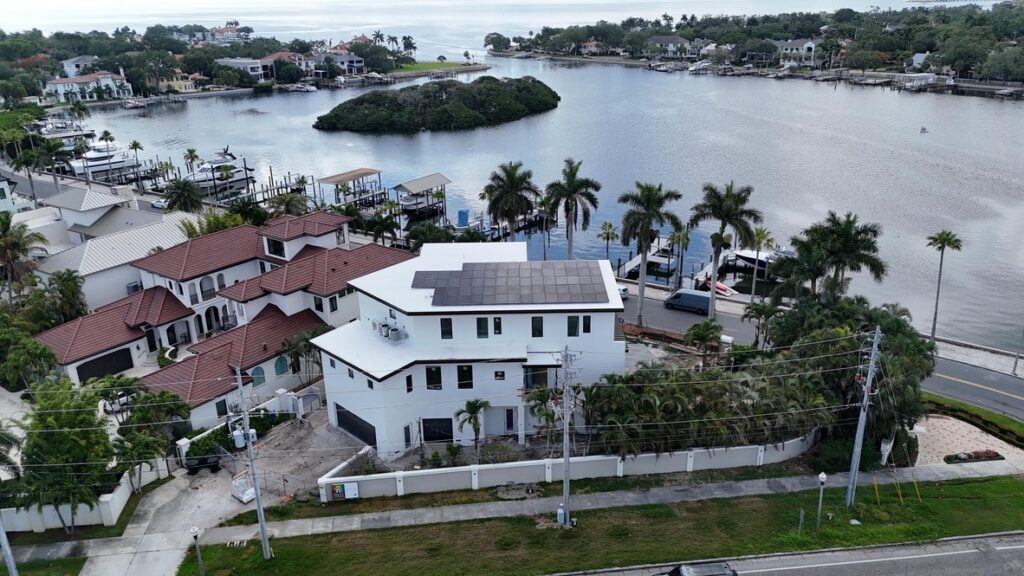
Waterfront New Construction
A flat-roof modern home on the water with a full-black rooftop array.
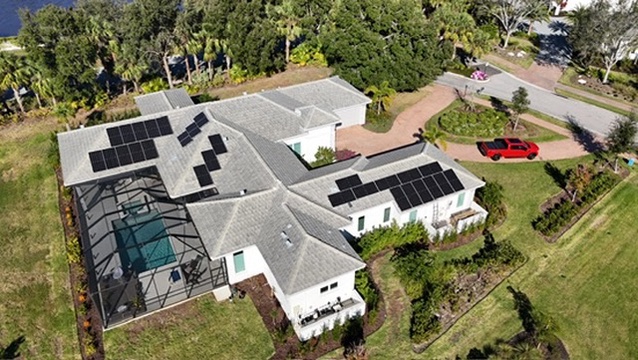
Multi-Plane Tile Roof
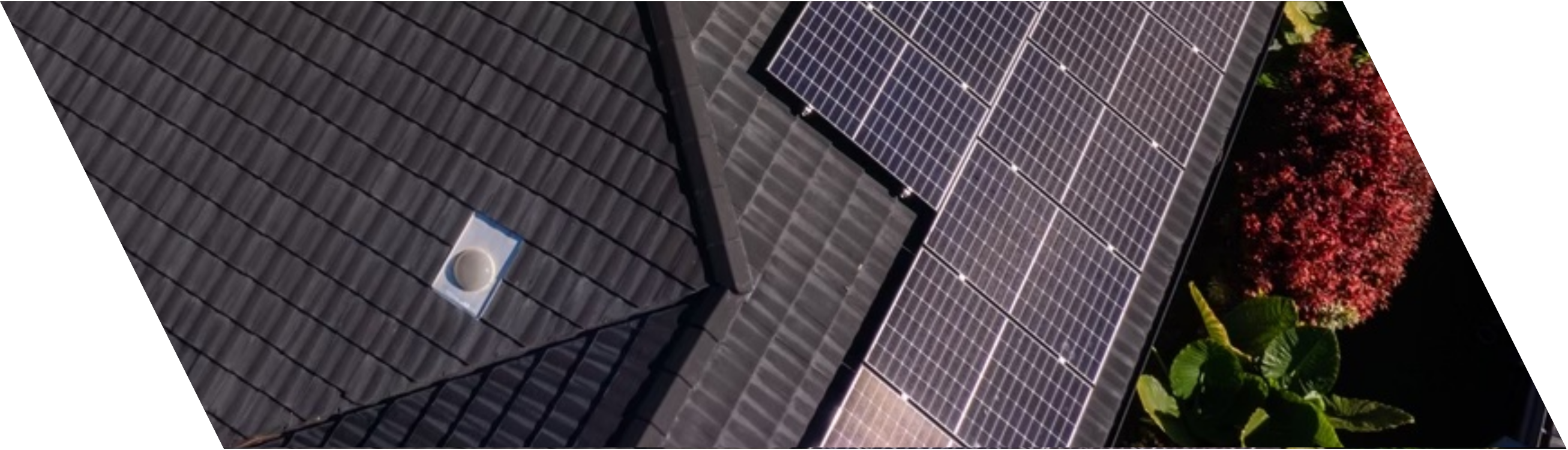
Arrays split across several tile roof faces around a screened pool cage, the layout microinverters and optimizers handle best.
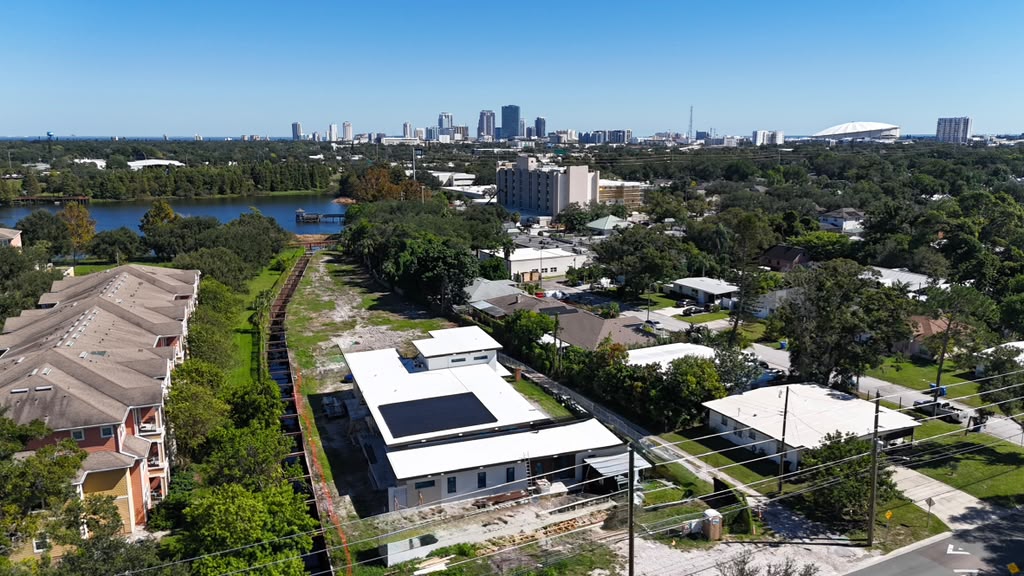
St. Petersburg Flat Roof
A flat-roof build in St. Petersburg with the downtown skyline in view.
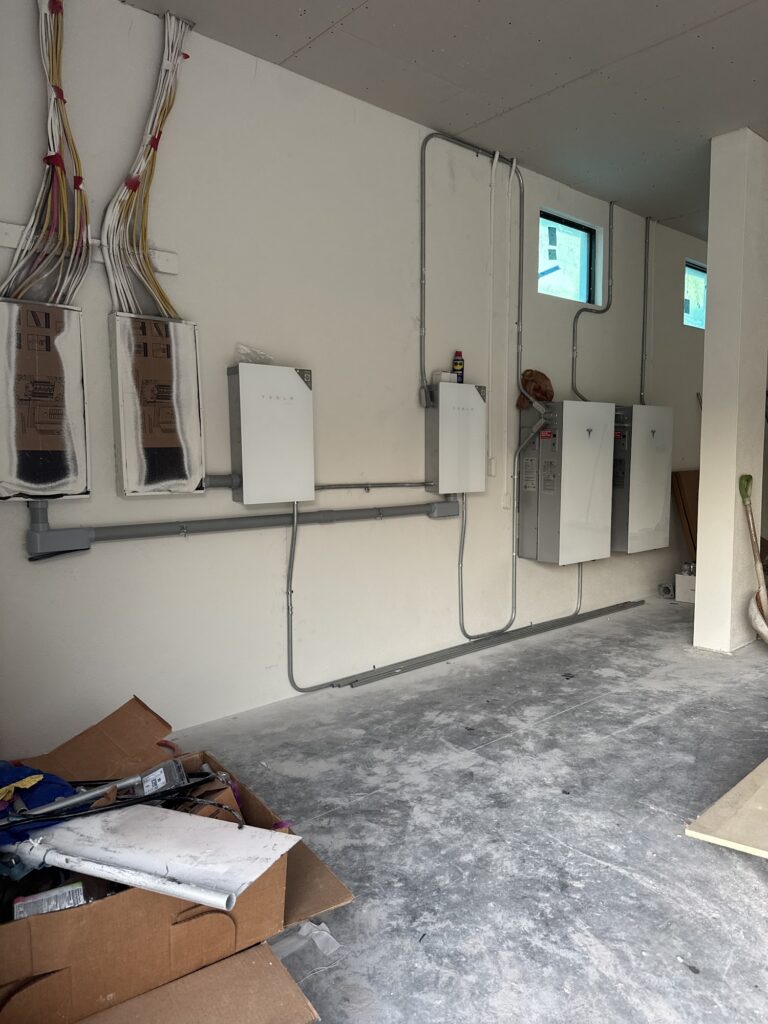
Tesla Powerwall 3 Backup
Two Powerwall 3 batteries and a Gateway on a new-construction garage wall.
How Much Can Solar Save You in Florida?
Your savings come down to four numbers: how much your roof produces, how much power you use, what your utility charges and what the system costs. Here’s how they work out in Tampa Bay using published 2025 and 2026 averages.
Your quote replaces these averages with your roof’s modeled production, your actual rate and your price. Business-owned systems may still qualify for the federal commercial credit; see rental property solar tax credit and confirm with your tax professional. Want a lower-cost route? Ask about our tested used solar systems.
Not Every Roof Is Ready for Solar
We’ll tell you if your roof isn’t a good fit before you spend a dollar. Age, shade and direction decide it.
We also check rafters or trusses, the underlayment on tile roofs and your main electrical panel. If your roof isn’t ready, we’ll tell you what it would take: a re-roof first, tree trimming or a different layout.
How a New Solar Installation Works in Tampa Bay and Orlando
From the first site visit to permission to operate, here is every step and who handles it.
- Site assessment: roof age and condition, rafters or trusses, main electrical panel rating, shade, and 12 months of power bills.
- Design and engineering: panel layout, equipment platform, and attachments engineered to the Florida Building Code wind loads for your address.
- Permit: submitted to your building department, such as Pinellas County, Clearwater, St. Petersburg, Tampa, Hillsborough County, Sarasota County, Orange County or Orlando, plus HOA approval where required.
- Install: our crew installs the attachments, racking, panels, inverters, batteries and the electrical tie-in.
- Inspection: the building department inspects the finished work.
- Utility interconnection: we file with your utility (Duke Energy Florida, TECO, FPL or OUC), which sets the meter and issues permission to operate. The system turns on after that.
System size sets the utility process. Under Florida’s interconnection rule, systems of 10 kW or less (Tier 1) pay no extra application fees and need no liability insurance. Systems over 10 kW up to 100 kW (Tier 2) can carry an application fee and up to $1 million in required liability insurance; over 100 kW up to 2 MW (Tier 3), up to $2 million. A system also can’t exceed 90% of your electrical service rating. We plan for all of this in the design.
GET YOUR SOLAR INSTALL QUOTE
No cost, no obligation. Tell us about your home or business and we’ll follow up to size your system. Prefer to talk? Call (727) 594-0010.
Frequently Asked Questions
Everything from the site assessment to permission to operate: design, engineering, permits, roof attachments and flashing, panels, inverters, the electrical tie-in, an optional battery, inspection and utility interconnection. Sun Lift Solar handles it as a Florida Certified Solar Contractor (CVC57333), certified on Enphase, SolarEdge and Tesla equipment.
Enphase converts power at each panel with a microinverter, SolarEdge pairs an optimizer at each panel with one central inverter, and Tesla pairs the Powerwall battery and its built-in inverter with a backup gateway. Enphase suits shaded or multi-plane roofs, SolarEdge suits larger arrays, and Tesla is the pick for whole-home backup. We recommend one based on your roof, shade and backup goals.
Add one if you want power during outages, which is the main reason Florida homeowners buy a battery. Because FPL, Duke Energy Florida and TECO credit exported solar kWh for kWh, a battery adds little bill savings on its own. Adding it with the panels means one design and one permit, though an IQ system can take a battery later.
Usually 2 to 4 weeks from permit submission to permission to operate, depending on your jurisdiction. Permitting, inspection and utility interconnection set that timeline; the installation itself is the short part, and we give you the expected schedule for your address with your quote.
Not for systems homeowners buy. The 30% federal residential credit ended December 31, 2025. Florida’s sales tax and property tax exemptions still apply, and business-owned systems may still qualify for the federal commercial credit; confirm with your tax professional.
Not every roof is. We check age, shade, direction and structure on the site visit. If your roof is close to replacement or heavily shaded, we’ll tell you before you buy, since re-roofing under solar later means paying to remove and reinstall the panels.
Yes. We install rooftop systems for businesses and rental properties. Systems over 10 kW go through Tier 2 or Tier 3 utility interconnection, which we plan for from the first design.
Clearwater, St. Petersburg, Tampa, Sarasota, Orlando and Daytona Beach, plus Fort Myers and Miami.
Sun Lift Solar is a Florida Certified Solar Contractor (CVC57333). Tax information on this page is general, not tax advice; confirm with your tax professional.